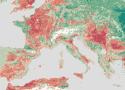
A CSIC team in Barcelona has developed CADI, a platform that forecasts, on a 10‑kilometre grid, how much farmland will lose productivity to climate change by 2100; Spain’s interior fares worse than the Cantabrian coast.
The effects of climate change and global warming are already evident and shaking up our risk landscape: warmer average temperatures, rising sea levels, melting ice caps, longer and more frequent heatwaves, erratic rainfall patterns and more weather extremes.
A most urgent question we need to ask is not only how to tackle climate change, but also how we can best adapt to a changing climate and avert the most damaging consequences – in short, how to mitigate climate risk.

The most significant increase in these losses in relation to GNI was also visible in the US, where losses measured in terms of GNI rose steeply from decade to decade up to the last five years – by which time they were roughly five times the level between 1980 and 1989. There was a similarly sharp increase in Germany, due in no small part to the losses caused by the Ahr Valley floods in 2021.
Unlike womanhood, which is often treated as a biological inevitability, manhood must be proven through action. This psychological framework suggests that men experience anxiety about failing to meet societal standards of masculinity. They must constant reinforce their status and avoid behaviors that appear feminine.
the avoidance of feminine stereotypes is a key reason why insecure men distance themselves from environmentalism. They appear to regulate their attitudes to avoid signaling traits that society assigns to women.
The current data indicates that for many men, the desire to be seen as a “real man” conflicts with the desire to save the planet.

The Trump administration has dismissed all the scientists and other authors working on the next National Climate Assessment.
Increased extreme heat is among the clearest impacts of global warming, but the economic effects of heat waves are poorly understood. Using subnational economic data, extreme heat metrics measuring the temperature of the hottest several days in each year, and an ensemble of climate models, we quantify the effect of extreme heat intensity on economic growth globally. We find that human-caused increases in heat waves have depressed economic output most in the poor tropical regions least culpable for warming. Cumulative 1992–2013 losses from anthropogenic extreme heat likely fall between $16 trillion and $50 trillion globally. Losses amount to 8% of Gross Domestic Product per capita per year for regions in the bottom income decile, but only 3.5% for regions in the top income decile. Our results have the potential to inform adaptation investments and demonstrate how global inequality is both a cause and consequence of the unequal burden of climate change.
We find that the economic damages resulting from climate change until 2049 are those to which the world economy is already committed and that these greatly outweigh the costs required to mitigate emissions in line with the 2 °C target of the Paris Climate Agreement (Fig. 1). This assessment is complementary to formal analyses of the net costs and benefits associated with moving from one emission path to another, which typically find that net benefits of mitigation only emerge in the second half of the century. Our simple comparison of the magnitude of damages and mitigation costs makes clear that this is primarily because damages are indistinguishable across emissions scenarios—that is, committed—until mid-century (Fig. 1) and that they are actually already much larger than mitigation costs. For simplicity, and owing to the availability of data, we compare damages to mitigation costs at the global level. Regional estimates of mitigation costs may shed further light on the national incentives for mitigation to which our results already hint, of relevance for international climate policy. Although these damages are committed from a mitigation perspective, adaptation may provide an opportunity to reduce them. Moreover, the strong divergence of damages after mid-century reemphasizes the clear benefits of mitigation from a purely economic perspective, as highlighted in previous studies.

It’s not as bad as you think—it’s worse.

Surpassing 1.5°C of warming can be undone at a later date – using tech, land and resources that don’t exist.
De facto, what they said was this: staying below a temperature limit is the same as first crossing it and then, a few decades hence, using methods of removing carbon from the atmosphere to dial temperatures back down again.
From some corners of the scientific literature came the assertion that this was nothing more than fantasy. A new study published in Nature has now confirmed this critique. It found that humanity’s ability to restore Earth’s temperature below 1.5°C of warming, after overshooting it, cannot be guaranteed. Many impacts of climate change are essentially irreversible. Those that are might take decades to undo, well beyond the relevant horizon for climate politics. For policy makers of the future, it matters little that temperatures might eventually fall back again; the impacts they will need to plan for are those of the overshoot period itself.

From planting trees to painting streets white, US cities are fighting extreme heat.

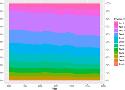
fully 40% of total U.S. emissions were associated with income flows to the highest earning 10% of households. Among the highest earning 1% of households (whose income is linked to 15–17% of national emissions) investment holdings account for 38–43% of their emissions
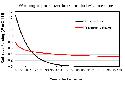
Comparing on a near-term basis (20-year time horizon) CH4 from enteric fermentation has more than double the impact on climate of CO2 from light-duty vehicles.
Comparing on a longer-term basis (100-year time horizon), the two are comparable.
"Now MintGreen is getting into industrial sales with a 12-year contract to provide heat with their new “Digital Boilers” (which recover more than 96% of the electricity used for mining) to North Vancouver’s district energy system to heat commercial and residential buildings. "