The scientists are debating six potential experiments. These are big swings that require the purchase of multimillion-dollar microscopy machines and years of work.
The discussion of the experiments brings up biological phenomena as widespread as how rabies spreads in the cortex and the neurobiology of birdsong. They debate whether they should examine molecules and synapses or focus on bigger-scale cells or circuits. Are analyses of connectomes in the mouse brain sufficient for some purposes, or would only human brains do?
“I’m not convinced that it’s going to work," says Berkeley’s Recht, the Flourish adviser, of the company’s main mission. “But if it does, it would be amazing.” AI would never be the same. And a lot of data centers might fall empty.
The human brain runs on an estimated 20 watts of power, a level of efficiency that silicon computing and artificial intelligence have not yet been able to replicate.
While it's "not aimed to replace what AI is doing" it's intended to "give us abilities that we've never had before," Kagan said.
The cells have a six-month lifespan and aren't yet capable of producing consistent, programmable results.
But analysts say the project's value could lie in its more sustainable power consumption compared to regular chips.
"We need better ways to manage that power envelope and get higher levels of efficiency," William Keating, CEO of semiconductor research company Ingenuity, said.
A September review of 71 studies with a total of nearly 100,000 participants found that heavy consumption of short-form video was associated with poorer cognition, especially in regard to attention spans and impulse control, based on a combination of behavioral tests and self-reported data.
The review, published in Psychological Bulletin, a journal of the American Psychological Association, also found links between heavy consumption of the videos and increased symptoms of depression, anxiety, stress and loneliness.
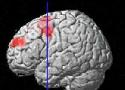
“Objectively, the connections [in the caudate-putamen] are real (note that Dr. Green is a trained forensic neurologist). What these connectivity patterns mean in relation to intuition and cognitive function will need to involve neurological studies that involve disciplines of neurophysiology such as functional MRI and more”

But if depression is truly able to disconnect this circuit, what does it mean? “One possibility,” the scientists suggested, “is that the uncoupling of this circuit could be associated with impaired ability to control and learn from social or other situations that provoke feelings of hate toward self or others. This in turn could lead to an inability to deal appropriately with feelings of hate and an increased likelihood of both uncontrolled self-loathing and withdrawal from social interactions.” This agrees with the finding that depressed individuals usually have difficulty controlling negative thoughts.