Daily Shaarli
February 2, 2020
many residents say it is nearly impossible to get the health care they need to treat — or even diagnose — the coronavirus
Layers of bureaucracy stand between residents and help. And the long lines outside hospitals for testing and treatment suggest that the outbreak is spreading far beyond the official count of cases.
“The situation that we’ve seen is much worse than what has been officially reported,” Long Jian, 32, said outside a hospital where his elderly father was being treated. Mr. Long said his father had to go to six hospitals and wait seven days before he could even be tested for the coronavirus.
“Those who can get diagnosed and treated are the lucky ones,” Mr. Long said. “In our neighborhood, many who weren’t able to get diagnosed ended up dying at home.”
“I’m very dissatisfied with the government,” Ms. Hu said. “It’s like only when the patients are close to death can they be admitted to a hospital.”
Tong Yixuan, 31, said Sunday that he panicked last week when he learned that in just a few days, his father’s cold had escalated into a full-blown illness that doctors said was almost certainly the coronavirus.
But neither his father, who had a 104-degree fever and was slipping in and out of consciousness, nor his mother, who was starting to show similar symptoms, could get tested. Hospitals said that there was no space, and that their symptoms were not severe enough, Mr. Tong said. His parents were sent home to quarantine themselves.
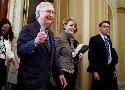
in the end, it's a failure to have an informed, interested electorate
"GOP senators and aides were confident that voters were paying little attention based on a survey conducted by the National Republican Senatorial Committee, the official campaign arm of Senate Republicans."
also a willingness to buy completely bogus arguments. basically: the president can do anything he wants if he thinks it's in his personal interest, because that's in the national interest (quid pro quo is not impeachable):
"Even if Bolton’s allegations of a quid pro quo were true, isn’t that still not an impeachable offense, so would his testimony add anything? Patrick Philbin, a deputy White House counsel, responded that it would not be an impeachable offense. That answer was pivotal, especially in getting Lisa’s vote,” Cruz said."
Convolutional networks and Transformers: Tensor Cores > FLOPs > Memory Bandwidth > 16-bit capability
Recurrent networks: Memory Bandwidth > 16-bit capability > Tensor Cores > FLOPs
A simple and effective way to think about matrix multiplication AB=C is that it is memory bandwidth bound: Copying memory of A, B unto the chip is more costly than to do the computations of AB. This means memory bandwidth is the most important feature of a GPU if you want to use LSTMs and other recurrent networks that do lots of small matrix multiplications. The smaller the matrix multiplications, the more important is memory bandwidth.
On the contrary, convolution is bound by computation speed. Thus TFLOPs on a GPU is the best indicator for the performance of ResNets and other convolutional architectures. Tensor Cores can increase FLOPs dramatically.
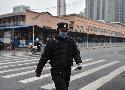
Even after cases were being reported in Thailand and South Korea, Wuhan officials organized holiday shopping fairs like the one Pan visited. They held a downtown community potluck attended by as many as 40,000 families. They distributed hundreds of thousands of tickets to local attractions.
“Everything was down to not collecting cases, not letting the public know,” said Dali Yang, a prominent scholar of China’s governance system at the University of Chicago. “They were still pushing ahead, wanting to keep up appearances.”
Without clear government warnings, people kept traveling — both within and beyond China.
Yang Jun, a prominent sales executive in the photovoltaic equipment industry, traveled to a meeting in Wuhan on Jan. 6 and returned home on the train to Beijing via Shanghai a week later.
A day before he checked himself into a hospital, he attended a school event with his daughter and sat in a lecture hall with hundreds of other parents, according to a statement released later by the Beijing school that asked all parents to quarantine themselves.
Yang died this week
...
In a Jan. 27 state media interview, Wuhan Mayor Zhou Xianwang said he was not authorized by his superiors to disclose the epidemic earlier
...
The Supreme People’s Court also issued an unusual statement admonishing the Wuhan police for detaining eight scientists.
“If society had at the time believed those ‘rumors,’ and wore masks, used disinfectant and avoided going to the wildlife market as if there were a SARS outbreak, perhaps it would’ve meant we could better control the coronavirus today,” the high court said. “Rumors end when there is openness.”
“This was an issue of inaction,” said Yanzhong Huang, a senior fellow for global health at the Council on Foreign Relations who studies China. “There was no action in Wuhan from the local health department to alert people to the threat.”
The first case, the details of which are limited and the specific date unknown, was in early December. By the time the authorities galvanized into action on Jan. 20, the disease had grown into a formidable threat.
It is now a global health emergency. It has triggered travel restrictions around the world, shaken financial markets and created perhaps the greatest challenge yet for China’s leader, Xi Jinping. The crisis could upend Mr. Xi’s agenda for months or longer, even undermining his vision of a political system that offers security and growth in return for submission to iron-fisted authoritarianism."
...
Beijing was involved from the get-go
"The day before, on Dec. 31, national authorities had alerted the World Health Organization’s office in Beijing of an outbreak."
...
“Stressing politics is always No. 1,” the governor of Hubei, Wang Xiaodong, told officials on Jan. 17, citing Mr. Xi’s precepts of top-down obedience. “Political issues are at any time the most fundamental major issues.”
Shortly after, Wuhan went ahead with a massive annual potluck banquet for 40,000 families from a city precinct, which critics later cited as evidence that local leaders took the virus far too lightly.
...
Wuhan’s mayor, Zhou Xianwang, later took responsibility for the delay in reporting the scale of the epidemic, but said he was hampered by the national law on infectious diseases. That law allows provincial governments to declare an epidemic only after receiving central government approval. “After I receive information, I can only release it when I’m authorized,” he said.