Daily Shaarli
December 15, 2019
"China has also taken steps to gain greater control over its technology sector, which flourished largely free from government influence.
Approvals of new video game titles have been frozen since a shift in regulation that has given the Communist Party’s propaganda department a direct role, an unusual degree of power over what had been a government process. Tencent, China’s video game giant and one of the world’s largest technology companies, has lost nearly one-third of its market value. Tencent declined to comment.
Private entrepreneurs are loath to speak out for fear of attracting official condemnation. But signs of distress aren’t hard to find.
Last month, Chen Shouhong, the founder of an investment research firm, asked a group of executive M.B.A. students — many of whom already owned publicly listed companies — to choose between panic and anxiety to describe how they feel about the economy. An overwhelming majority chose panic, according to a transcript. Mr. Chen declined to be interviewed."
"The growing use of immunity, however, has raised worries that private companies have been given the green light to win business contracts illegally.
A local prosecutor said they dropped the charge because Mr Yang had made good use of the state subsidy. “It is true that he has made up some facts,” said the prosecutor. “But the project is completed and is having a positive impact.”
"With interest rates near historic lows, the Bank of Canada doesn’t have much conventional ammunition to fight a major downturn, a problem faced by most other central banks. That’s aggravated by Canada’s extremely high household debt levels, which will make policy makers even more reluctant to lower borrowing costs.
The end result may be a growing reliance on fiscal policy to manage slowdowns, in coordination with the Bank of Canada in a relationship that could be formalized as early as 2021 when the central bank completes a mandate review.
“It’s pretty clear we are reaching limits to what central bankers can do with conventional instruments,” Perrault said. “That’s going to place a premium on policy coordination. We will need somebody that understands the linkages between monetary and fiscal policy, and how coordination between these policies can and should be executed while maintaining the central bank’s independence.”
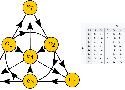
Quaternions are fundamentally non-commutative, and explain why rotating a three-dimensional object about one axis and then another gives you a different final state than rotating that same object about the same two axes, but in the opposite order.