
We assessed the 29 winning essays of the Bigelow Institute of Consciousness Studies (BICS) contest using an evidence hierarchy approach adopted by many scientific fields. Two independent judges rated the target essays for their quality of scientific evidence, reproducibility, and replicability using an evidence hierarchy adapted from several published models that accommodate both qualitative and quantitative evidence.
According to our criteria, six essays (20.7%) were categorized as the highest level of scientific evidence, four essays (13.8%) were categorized at a medium level of scientific evidence, whereas the remaining 19 essays (65.5%) were considered a low level of scientific evidence. The overall agreement of the essay rankings between the present authors' classifications of evidence quality and the rating system used by the BICS judges was only 44.8%, with a nonsignificant Spearman's rho correlation of .03.
This result indicates extremely little concordance (overlap) of the two evaluation systems, which corroborates prior research on the critical shortcomings of evidence hierarchies. The essays representing the highest level of scientific evidence per our criteria involved near-death experiences and mental mediumship. For other anomalies that ostensibly support the survival hypothesis (e.g., physical mediumship or electronic voice phenomena), more studies with refined experimental designs are needed to improve their quality of evidence as defined in current scientific terms. Important considerations and future research directions are likewise discussed.

The findings suggest that important cognitive abilities, including language comprehension and prediction, may not depend on conscious awareness. Instead, consciousness itself may arise from communication across multiple brain regions rather than from activity within a single area such as the hippocampus.
The researchers also noted similarities between the brain's predictive behavior and artificial intelligence (AI). Just as large language models generate text by anticipating the next word, the hippocampus appeared to make similar predictions during language processing. Understanding these shared principles could help scientists better understand both biological and artificial intelligence.
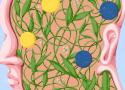
Consciousness is not separate from the physical world — our “soul” is of the same nature as our body and any other phenomenon of the world.
We have souls. We have an inner self. We can treat ourselves as transcendental subjects in the Kantian sense. We have emotions and spiritual life; we experience qualia. These entities are not obtained by addition to a physical state, but by subtraction from a complete physical account. Mental processes are physical processes described in a way that captures only their salient characteristics.

This interaction could help explain both why quantum processes can occur within environments like the brain and why we lose consciousness under anesthesia.
A grand experiment pitted two rival theories of consciousness against each other. Critics have condemned one of the two theories as pseudoscience, and have questioned whether the new study can deliver a clear verdict on either of them

“When it becomes accepted that the mind is a quantum phenomenon, we will have entered a new era in our understanding of what we are,” he says.
a drug binding to microtubules delayed unconsciousness in rats under anesthesia.
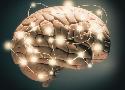
A silent symphony is playing inside your brain right now as neurological pathways synchronize in an electromagnetic chorus that's thought to give rise to consciousness.

Author Christof Koch shares 5 key insights from his new book, Then I Am Myself the World: What Consciousness Is and How to Expand It.
Consciousness is ultimately about being, not about doing. We are liberating ourselves from the constraints of strait-laced physicalism with an empirically testable theory that centers on experience, meaning the only thing that exists for itself, in an absolute sense. A theory that explains how the mind and its causal powers create the world, including the most active piece of organized matter in the known universe: the brain.
the research to date suggests that Consciousness evolved three times in early fish-like vertebrates more than 500 million years ago and a common ancestor of arthropods such as insects spiders and Crustaceans at around the same time and then in the cephalopod mollusks around 300 million years ago
There’s a battle over consciousness research – and whether it can be understood purely through science.
Opponents of IIT may in part be motivated by a desire to sharply distinguish the science from the philosophy of consciousness, thus ensuring the former is perceived – in particular by funders – as a serious scientific enterprise.