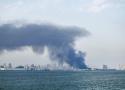
‘They blew the hell out of Bahrain,’ acting Secretary of the Navy Hung Cao said in an interview with The Epoch Times.
The Iranian regime has existential choices to make as it decides between diplomacy and conflict. Iran’s constitution is clear about who has the authority to set the country’s course. But no one seems able to say for sure whether that person is alive or dead. And without a firm hand at the top, indecision can become a purgatory without a foreseeable end.
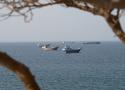
The battle for control of the Strait of Hormuz has become the focal point of the Iran war. Over the past several months, both Iran and the United States have claimed the upper hand – and the competing rhetoric has caused considerable confusion and doubt.

According to a report from MS NOW, the USS Abraham Lincoln wasn’t resupplied because Iranian strikes destroyed a key Navy resupply base in the Middle East.
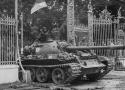
The United States, under whatever management, will confront these consequences while being itself weakened at home and abroad. Its allies will have less confidence in its capabilities; its public will be less willing to bear the costs of even productive engagement; its rivals will be likelier to challenge Washington’s will. Those results will be far more lasting and severe than the U.S. failure in its war in Vietnam.
Under Trump’s proposal, Iran would “commit never to pursue nuclear weapons,” dismantle its three main nuclear facilities, and surrender all enriched uranium to the International Atomic Energy Agency. Tehran would also suspend ballistic missile production; limit the rest of its missile program; reopen the Strait of Hormuz; and stop funding regional proxy groups, including Hezbollah, Hamas, and the Houthis.
What Mr Graham and his colleagues should be most concerned about is that this ill-starred foray into the Middle East has ended up leaving the Iranian regime stronger than it was before the war, and more threatening than it was under Mr Obama’s nuclear deal, which Mr Trump tore up in one of his fits of childish pique.
The problem now is that Mr Trump has endowed Iran with a far more useful option than any nuclear device: the effective weaponisation of the Strait of Hormuz. This is a weapon of mass economic destruction of unique power. It was given satisfactory proof of use during the conflict, when not even US armed forces and a naval counter-blockade could prevent an enfeebled Tehran from taking the world economy hostage.
Whatever piece of paper the Americans and Iranians eventually sign, the ayatollahs and the Revolutionary Guards will always have that potential for blackmail easily at their command. And that is why America has lost this war.
Accusing Netanyahu of leading Israel to a “diplomatic disaster much worse than Obama’s agreement” with Tehran in 2015, Liberman told reporters ahead of his weekly faction meeting in the Knesset that Israel “must inform the US that we do not accept any linkage, any connection, between the Iranian arena and the Lebanese arena.”
An Israeli who had been briefed on the deal with Iran, and who requested anonymity to discuss diplomacy, listed Israel’s main problems with the proposal:
- There are no clear answers regarding the treatment of Iran’s stockpile of enriched uranium, and not enough curbs on Iran’s nuclear program, with the deal appearing to rely on Iranian good will.
- Instead of creating the conditions for the collapse of the Iranian government, the deal would allow funds to start flowing back into its coffers.
- The deal lays out no clear mechanism for forcing Iran to halt its support for its proxy forces. But it would mean the suspension of Israel’s campaign against Hezbollah, the militant group it is fighting in Lebanon.
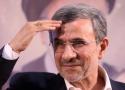
Lest we forget, Ahmadinejad had a reputation for such ruthless crackdowns on political opponents that Amnesty International noted in 2014 that his rule had “sounded the death knell for academic freedom in Iran”.
Yet, fast forward two decades, and Netanyahu reportedly now thinks Ahmadinejad is the best person to lead Iran; the person for whom it was worth killing Khamenei, Iran’s most influential opponent of nuclear weapons.
The list submitted by Tehran includes demands for compensation for war damage sustained during the now 10-week conflict, as well as recognition of Iranian sovereignty over the vital Strait of Hormuz shipping route.
Trump is highly unlikely to agree to pay Iran reparations linked to the war, nor support Iranian sovereignty over the Strait of Hormuz—the largely closed-off passageway through which one-fifth of the world’s oil supply normally passes.
Illo illustration of a man and woman in a gas mask in front of a survival shelter
The Trump administration has also said it will not come to the table unless Iran agrees to end its nuclear program to prevent it from obtaining a nuclear weapon.
Iran, meanwhile, has insisted that talks about ending the war must happen first and has suggested delaying nuclear negotiations until a later date.
the CIA determined that Tehran retains substantial ballistic missile capabilities despite weeks of intense U.S. and Israeli bombardment. Iran has maintained approximately 75 percent of its prewar inventories of mobile launchers and about 70 percent of its prewar stockpiles of missiles
“The repricing is from today onwards. We expect significant upside to both crude and products,” she added, suggesting the futures price of Brent, the international benchmark, could climb to $150 to $200 a barrel.
Bush and Trump both came to office determined to avoid the mistaken wars of their predecessors. Nevertheless, they both embarked on military adventures fed by a hubristic belief in American power.
But while the U.S. was strong enough — and its adversaries still weak enough — to recoup much of the damage inflicted by Bush’s war, the war unfolding in Iran today will leave behind an America that will have lost much of its global power, standing and influence, destined to confront rising adversaries all on its own.
Pakistani Foreign Minister Ishaq Dar met Tuesday in Beijing with his Chinese counterpart Wang Yi. At the end of the meeting they published a joint peace initiative:
- Immediate Cessation of Hostilities, with humanitarian assistance allowed to all war-affected areas.
- Start of peace talks as soon as possible under the principle of safeguarding the independence and security of Iran and the Gulf states. All parties will commit to refraining from the use or the threat of use of force during peace talks.
- The parties to the conflict will immediately stop attacks on important infrastructure, including energy, desalination and power facilities, and peaceful nuclear infrastructure, such as nuclear power plants.
- The parties will allow the early and safe passage of civilian and commercial ships, and restore normal passage through the Strait as soon as possible.
- Conclusion of an agreement for establishing a comprehensive peace framework based on the principles of the UN Charter and international law.
The countries with the least capacity to pay elevated prices feel it first and hardest.
The countries most exposed are those already import-dependent on fertilizer and food: South and Southeast Asia, North Africa, Sub-Saharan Africa, parts of the Middle East.